Garden design-build vs hiring a designer and installer separately: where split contracts go wrong, what one accountable crew fixes, and the exceptions.
There are two ways to get a designed garden: hire a designer, take their plan, and shop it to installers — or hire one garden design-build crew that carries the project from concept to planted beds. The split model sounds prudent, even sophisticated. In practice, for residential gardens, it's where budgets quietly inflate and accountability quietly evaporates. Here's the honest case for design-build, and the honest cases against it too.
Where split contracts go wrong
- The unbuildable plan: designers who don't install can draw plants that struggle in GTA clay, spacing that ignores mature sizes, and beds priced on optimism. The installer discovers this in your yard, mid-job, and every fix is a change order.
- The accountability gap: when a plant fails in August, the designer says it was planted wrong and the installer says it was specified wrong. Both are plausible. Neither is coming back for free.
- The translation tax: every plan handoff loses information — soil notes, drainage intent, why that shrub is exactly there. You become the messenger between two contractors who've never met.
- The double margin: you pay design fees, then an installer's markup on interpreting someone else's drawings — often with a re-quote when the plan meets the real yard.
A plan drawn by someone who will personally dig the holes is a different kind of plan.
What one crew changes
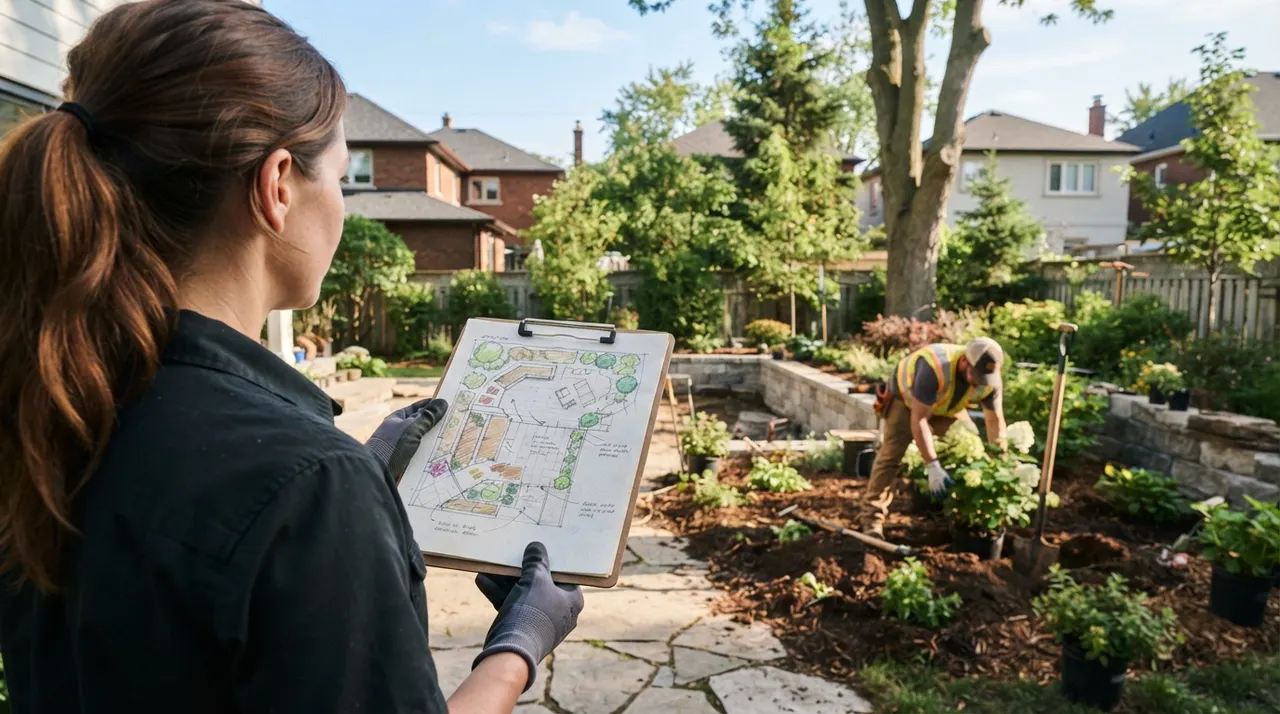
Design-build collapses the gap. The person who assesses your soil and sun designs the beds; the crew that plants them answers for the design. Plants get specified because they thrive in this yard's conditions — not because they photograph well on a rendering — and the quote is real, because the people pricing it are the people doing it. When something needs adjusting mid-install (a hidden root mass, a wetter corner than expected), the design flexes on the spot instead of waiting on a consultant's revision. And a year later, there's exactly one phone number attached to how the garden is doing. It's the model Ontario's horticultural trades association, Landscape Ontario, effectively encourages homeowners toward: check that whoever you hire actually has professional standing in both halves of the work.
What to ask any design-build crew
- "Who designs, and who plants — and have they met?" In a real design-build operation the answer is short. In a rebranded install crew with a plant catalogue, it gets vague.
- "Can I see a project two years after planting?" Anyone can show install-day photos; gardens are judged in year two, when the design either knits together or shows its gaps.
- "How do you handle substitutions?" Nurseries run out of specified plants constantly. You want to hear that substitutions match growing conditions and mature size, not just flower colour.
- "What does the first season of aftercare look like?" A crew that plans to still be answering your calls in August prices and plants differently than one that's done at the final invoice.
When split contracts genuinely make sense
Honesty clause: design-build isn't always the answer. A large estate project with engineering, permits, and multiple trades can justify an independent landscape architect coordinating specialist contractors. A confident DIY gardener who just wants a professional planting plan to execute over three years is well served buying design alone. And if you already have a plan you love, a good crew can absolutely build from it — we do. The design-build argument is strongest in the broad middle: the typical Toronto front- or back-yard garden, where the project is one crew-week of work and the overhead of two contracts exceeds any benefit.
What it looks like in practice
One consultation, one plan, one itemized quote, one crew: that's our garden design Toronto service — concept, plant selection for Toronto's clay and hardiness zone, bed prep, planting, mulch, and aftercare guidance, from the same people end to end. For budget context before you book anything, our garden installation cost guide breaks down realistic Toronto ranges by project size — and if your garden plans are tangled up with a patio or walkway decision, read how to sequence a combined interlocking and landscaping project first, because build order changes everything. Free design consultations start at the contact form on our homepage.
References
This article is general educational information, not professional, medical, or purchasing advice. External links are provided for reference; Landscaping Toronto Pros is not affiliated with and does not endorse any third-party brand or organization listed.