A year-round tree & shrub care calendar for Toronto: what to prune each season, what to leave alone, permit rules, and when to call a professional.
Good tree & shrub care is mostly about timing — and timing is exactly what generic advice gets wrong. Tree and shrub care in Toronto runs on our calendar: a long dormant winter, an explosive May, humid summers, and species — Japanese maples, cedars, hydrangeas, mature Norway maples — that each want different things at different times. Prune the right plant in the wrong month and you lose a year of flowers; prune it badly and you can disfigure it for a decade. Here's the year as we actually work it.
Late winter (February–March): structure season
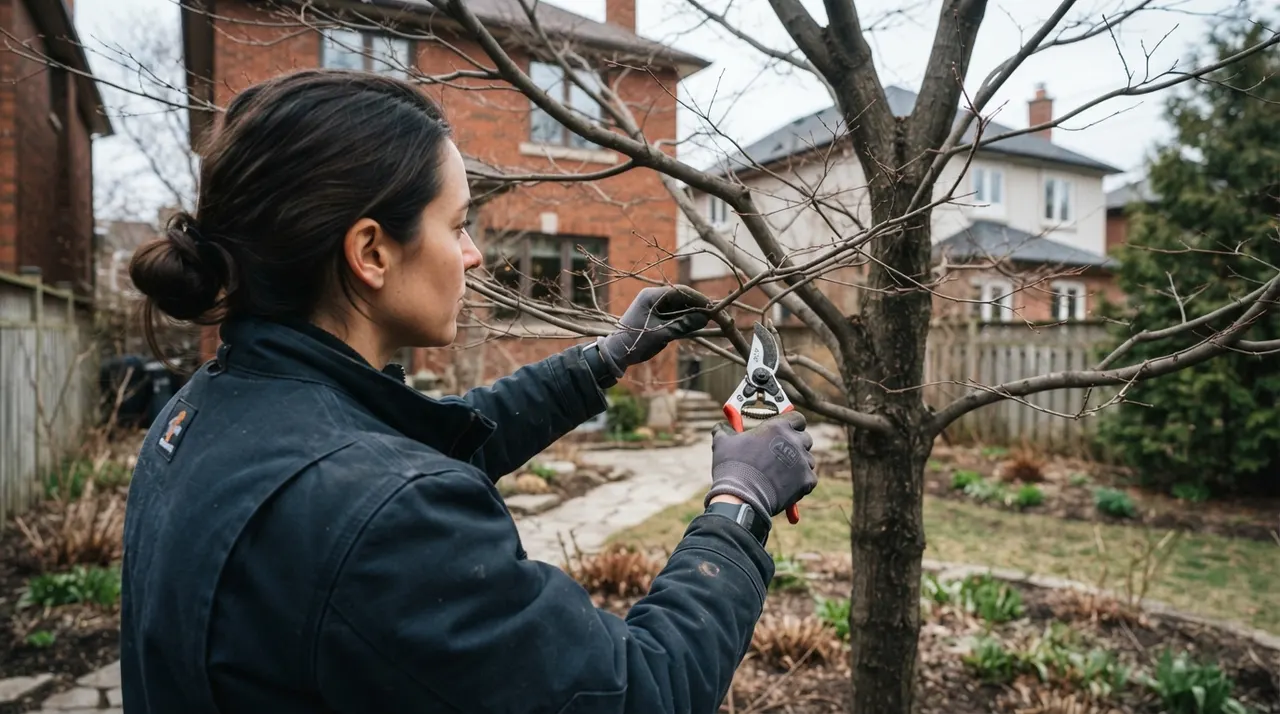
Dormancy is the best window for structural pruning on most deciduous trees and summer-flowering shrubs. With the leaves down you can see the branch architecture clearly, the plant isn't wasting energy on wounded growth, and insect and disease pressure is at its lowest. This is when crossing branches, competing leaders, and deadwood come out. One notable exception: maples and birches "bleed" sap heavily from late-winter cuts — unsightly but generally harmless, though many pros simply prune them in summer instead.
Spring (April–June): let the bloomers bloom
The single most common pruning mistake we see in Toronto yards: shearing spring-flowering shrubs — lilac, forsythia, weigela, mock orange — in April. These bloom on old wood, meaning the flower buds formed last summer, so a spring haircut removes the entire show. Penn State Extension's rule is the one to memorize: prune spring bloomers right after they finish flowering, and prune summer bloomers (which flower on new wood) in late winter. Spring is also the time to assess winter damage and cut back anything killed by cold or snow load.
A good pruning cut is an investment the plant repays for a decade. A bad one is a wound it spends a decade managing.
Summer (July–August): shaping and hedges
Summer is for finesse: hedge trimming once the flush of new growth has hardened off, light shaping of ornamentals, and clearance pruning where growth is crowding walkways, siding, or sightlines. Cedar hedges — the default privacy screen across the GTA — take their main trim in early-to-mid summer, cutting to keep a slightly tapered profile so the bottom stays green. It's also the season to watch for trouble: wilting on one branch, sticky residue, sawdust at the base. Caught in July, most problems are manageable; discovered next spring, fewer are.
Fall (September–November): resist the urge
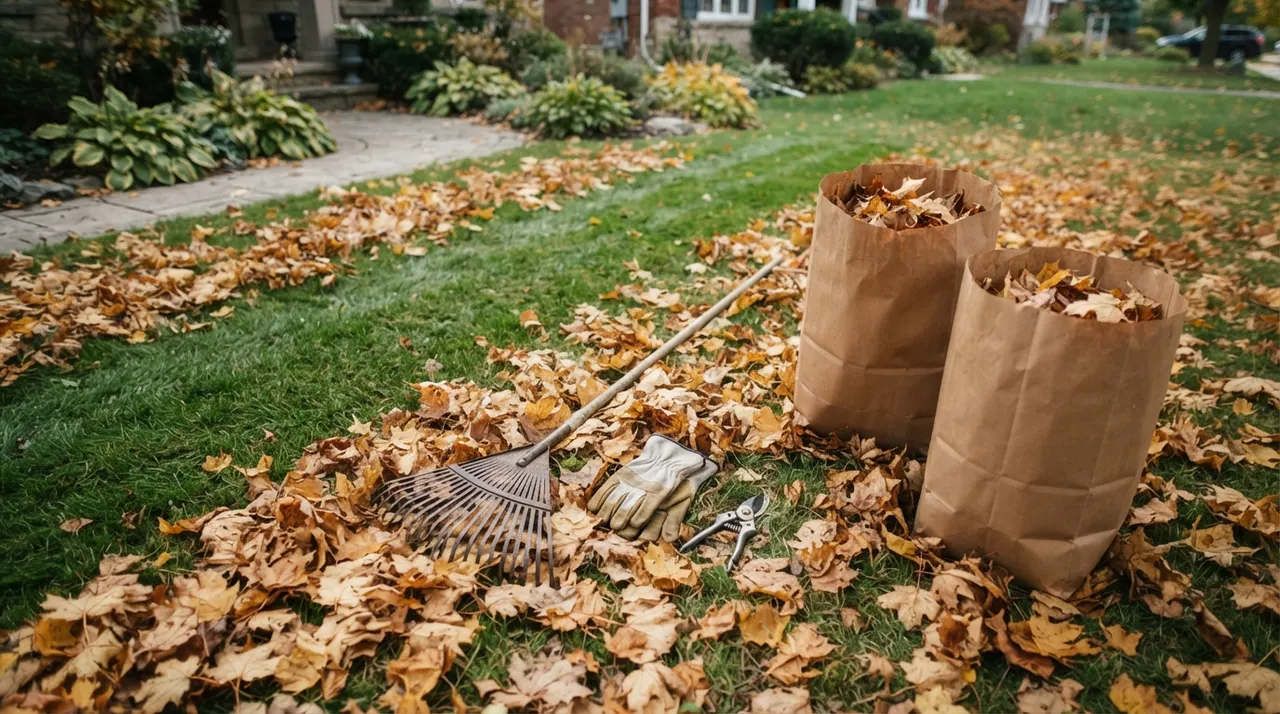
Fall is the season to mostly put the pruners down. Late cuts can push tender new growth that winter then kills, and pruning wounds heal slowest going into dormancy. What fall is for: removing genuinely dead or hazardous limbs before ice-storm season, watering evergreens deeply until freeze-up so they don't desiccate over winter, mulching root zones, and wrapping vulnerable young evergreens against salt spray near roads. Roll it into your fall cleanup and the whole yard goes into winter prepared.
A quick species cheat sheet for GTA yards
- Cedar hedges: main trim in early-to-mid summer; deep watering in late fall matters more than most owners realize, because cedars brown from winter drought, not just cold.
- Lilac, forsythia, weigela: prune within a few weeks after bloom, never in spring before it.
- Spirea, potentilla, panicle hydrangea: cut back in late winter — they flower on the new season's growth.
- Japanese maple: minimal, light-handed pruning in summer or late winter; these are ruined by shearing, never improved by it.
- Boxwood and yews: tolerate shearing well; tidy in early summer with a light follow-up if needed.
- Mature shade trees (maple, oak, honey locust): deadwood and clearance only from the ground — and check the bylaw before anything bigger.
Permits, and when to call a pro
Two honest boundaries. First, the City of Toronto protects private trees of 30 cm diameter and up under its tree bylaws — injuring or removing a protected tree without a permit can mean serious fines, so anything significant on a mature tree should start with a permit check. Second, know the limits of ground-based work: anything requiring climbing, rigging, or a chainsaw overhead is arborist territory, and a reputable landscaping company will tell you so. Our own tree and shrub care in Toronto covers exactly that scope — species-appropriate pruning, hedges, deadwood, shaping, and plant-health checks — and when a job needs a specialized removal crew, we say so and point you to one. For a closer look at the most common request we get, see our guide to shrub pruning in Toronto, or request a free assessment through the contact form on our homepage.
References
This article is general educational information, not professional, medical, or purchasing advice. External links are provided for reference; Landscaping Toronto Pros is not affiliated with and does not endorse any third-party brand or organization listed.