Lawn care in Toronto, season by season: mowing heights, watering rules, feeding, aeration, and what actually works under Ontario's pesticide ban.
Lawn care in Toronto is its own discipline. Our lawns are cool-season grasses growing on heavy clay, frozen for a third of the year, soaked in spring, and stressed by humid 30-degree stretches in July — and on top of that, Ontario law took the easy chemical shortcuts off the table years ago. A great Toronto lawn is absolutely achievable; it just comes from doing a handful of things at the right times rather than fighting the climate. Here's the whole year.
Spring (April–May): wake it up gently
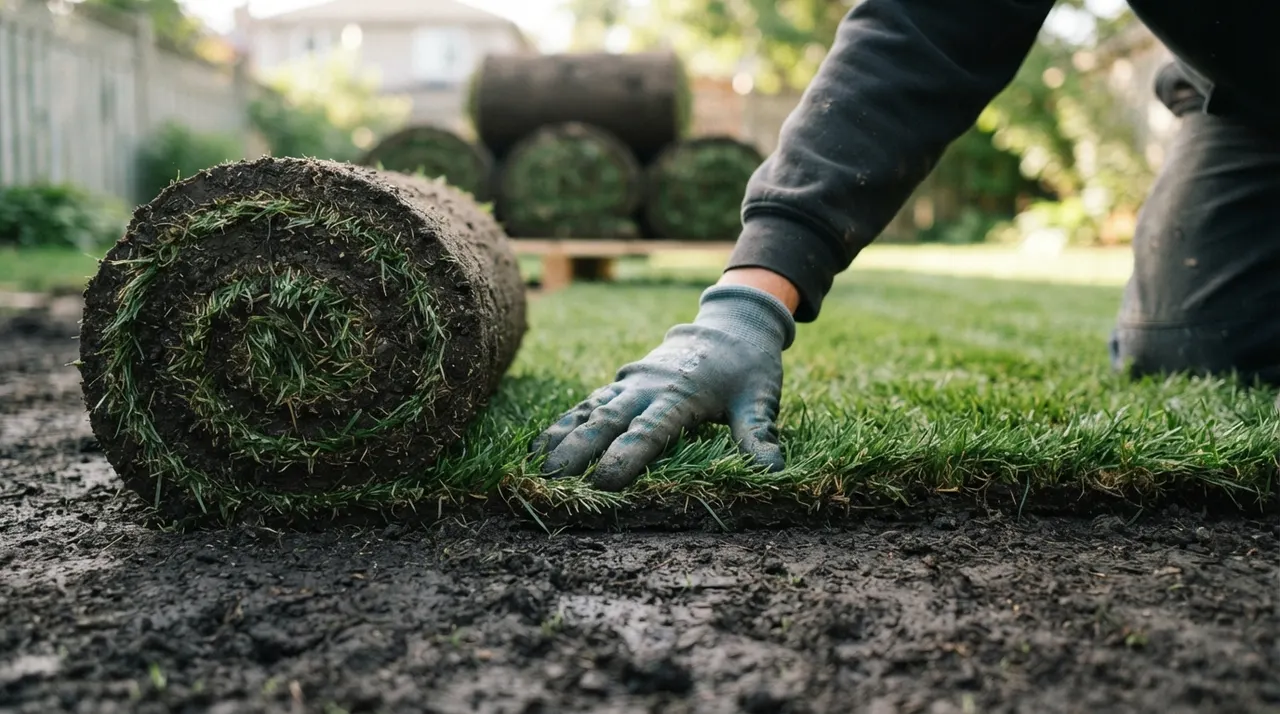
Stay off the lawn until it firms up — foot and mower traffic on saturated clay compacts it for the whole season. Once it's growing: a light rake to lift matted patches, overseeding into thin areas while the soil is cool and moist, and the season's first feeding once the lawn is actively growing. Start mowing when the grass needs it, and set the deck high from day one. If winter left you with grey matted patches, that's snow mold — usually it rakes out and recovers, and it's far less common on lawns that got a proper fall cleanup the November before.
Summer (June–August): height and water win
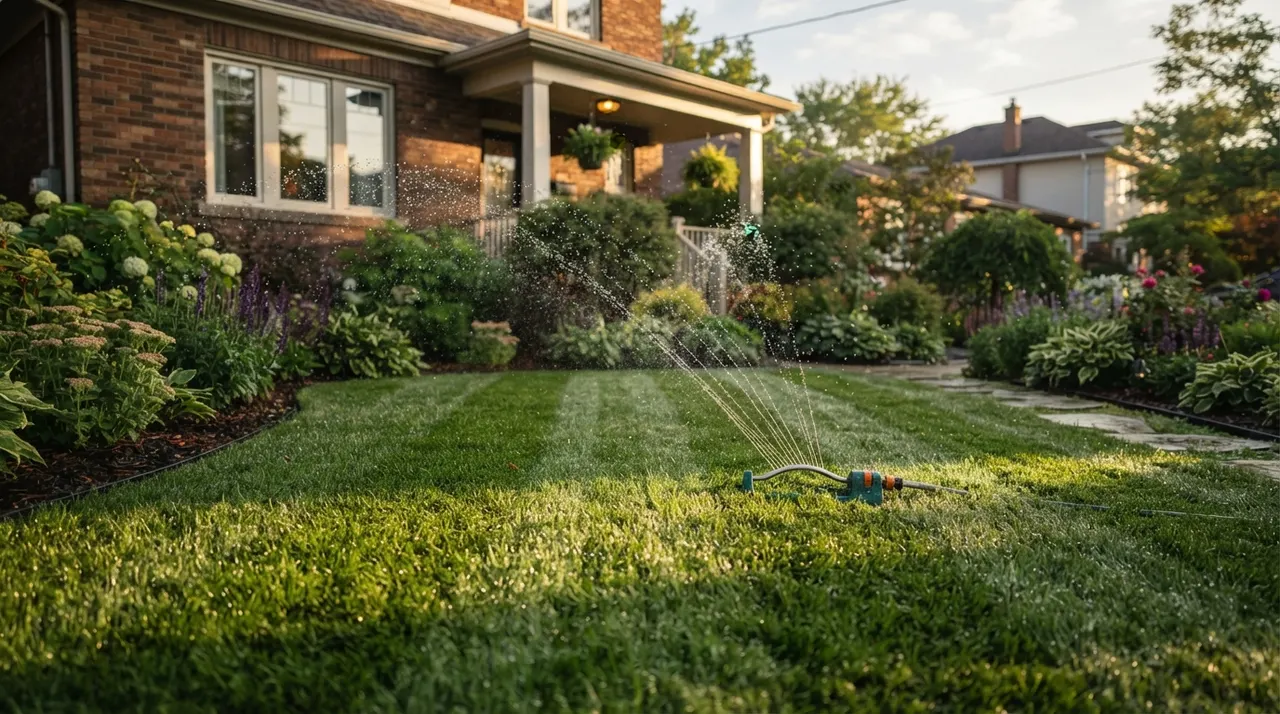
Two numbers carry a Toronto lawn through summer. The first is mowing height: around three inches. Taller grass shades the soil, holds moisture, and crowds out crabgrass — and turf research is emphatic that you should never remove more than a third of the blade in one cut. The second is watering: the City of Toronto's guidance is that an established lawn needs only about 2.5 cm (an inch) of water a week including rain, applied deeply and preferably in the morning. Deep and infrequent grows deep roots; a daily sprinkle grows shallow ones that fry in the first heat wave. In a real drought stretch, letting the lawn go golden and dormant is a legitimate choice — cool-season grass is built to bounce back.
Most Toronto lawns aren't underfed or under-watered. They're cut too short and watered too shallow.
The pesticide-ban reality
Ontario's cosmetic pesticides ban means the weed-and-feed products your parents used are no longer legal for lawn cosmetics — Ontario.ca maintains the rules and the short list of permitted lower-risk products, like iron-based selective controls and corn gluten. What actually works now is cultural: thick turf is the weed control. A dense, tall-mowed, well-fed lawn leaves dandelions nowhere to germinate, which is why the boring fundamentals — height, feeding, overseeding — are the modern weed strategy.
Fall (September–November): the money season
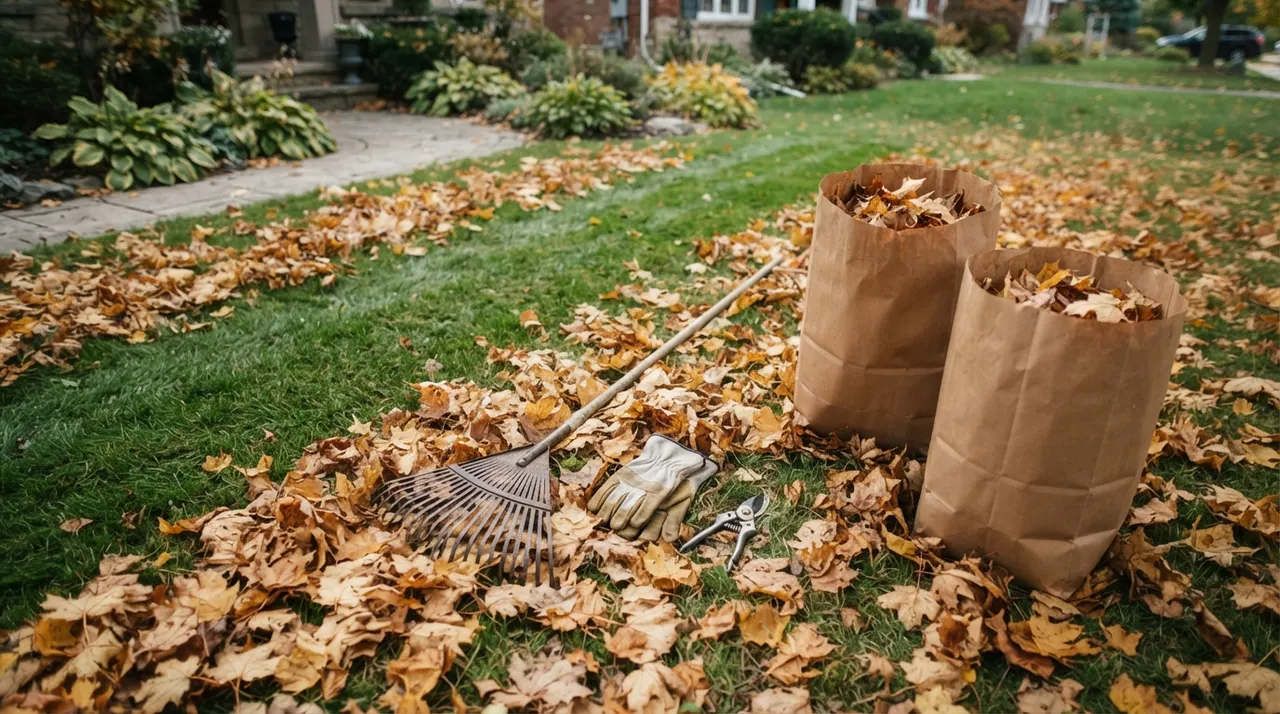
Fall is when next year's lawn is built. Cooler air, warm soil, and reliable rain make September the single best month in the Toronto calendar for the big three: core aeration (which GTA clay needs more than almost any other soil), overseeding into the aeration holes, and the season's most important feeding. Finish with leaf removal and a slightly shorter final cut so nothing mats under the snow. A lawn that gets a real September and a clean November barely needs rescuing in May.
The whole year on one card
- April: rake matted spots, overseed thin areas, first feeding once growth starts, mow high from cut one.
- May–June: weekly mowing at ~3 inches, edge the beds, spot-seed anything the spring revealed.
- July–August: hold the height, water deeply once a week (or let it go dormant with a clear conscience), stay off it during heat waves.
- September: the big month — core aerate, overseed, main feeding, repair summer damage while soil is warm.
- October–November: keep mowing until growth stops, full leaf cleanup, slightly shorter final cut.
- December–March: stay off frozen turf, go easy on de-icing salt near lawn edges — salt burn along walkways is spring's most preventable repair.
When the lawn is past caring for
Honesty clause: maintenance can thicken a thin lawn, but it can't resurrect one that's mostly weeds and bare clay — we've written a separate guide on when a lawn is too far gone and needs resodding. For everything short of that, this calendar is exactly what our lawn care Toronto programs run on: weekly mowing at the right height, feeding, aeration, and overseeding timed to the season, from one crew that shows up rain or shine. Get a free quote through the contact form on our homepage.
References
- Ohio State University Extension — Lawn Mowing (heights, one-third rule)
- City of Toronto — Water-Efficient Landscaping (2.5 cm/week guidance)
- Ontario.ca — Pesticides for Home Lawns and Gardens
This article is general educational information, not professional, medical, or purchasing advice. External links are provided for reference; Landscaping Toronto Pros is not affiliated with and does not endorse any third-party brand or organization listed.